If you have children, do you prefer school holidays or term time? I’m firmly in the school holiday camp and could happily have more of it. I realise that comes with a certain flexibility I have as a photographer, which often means the work gets done at 7am, if I manage to creep downstairs and the girls don’t wake up the moment I open my laptop. I can potter around the house unnoticed, but the moment I sit down, it’s “Mama!”.
By week two of the holidays, ideas tend to run thin. If you are looking for simple things to do with children in Fleet or nearby in Hampshire, especially something that gets you outside without much planning, these photography-based activities work well at home, in the garden, or on a walk around places like Fleet Pond or your local park. They let children practise paying attention, noticing patterns and creating their own meaning. This is also what sits behind my approach to family photography, not just how things look, but what draws attention and meaning for them.
Disposable cameras
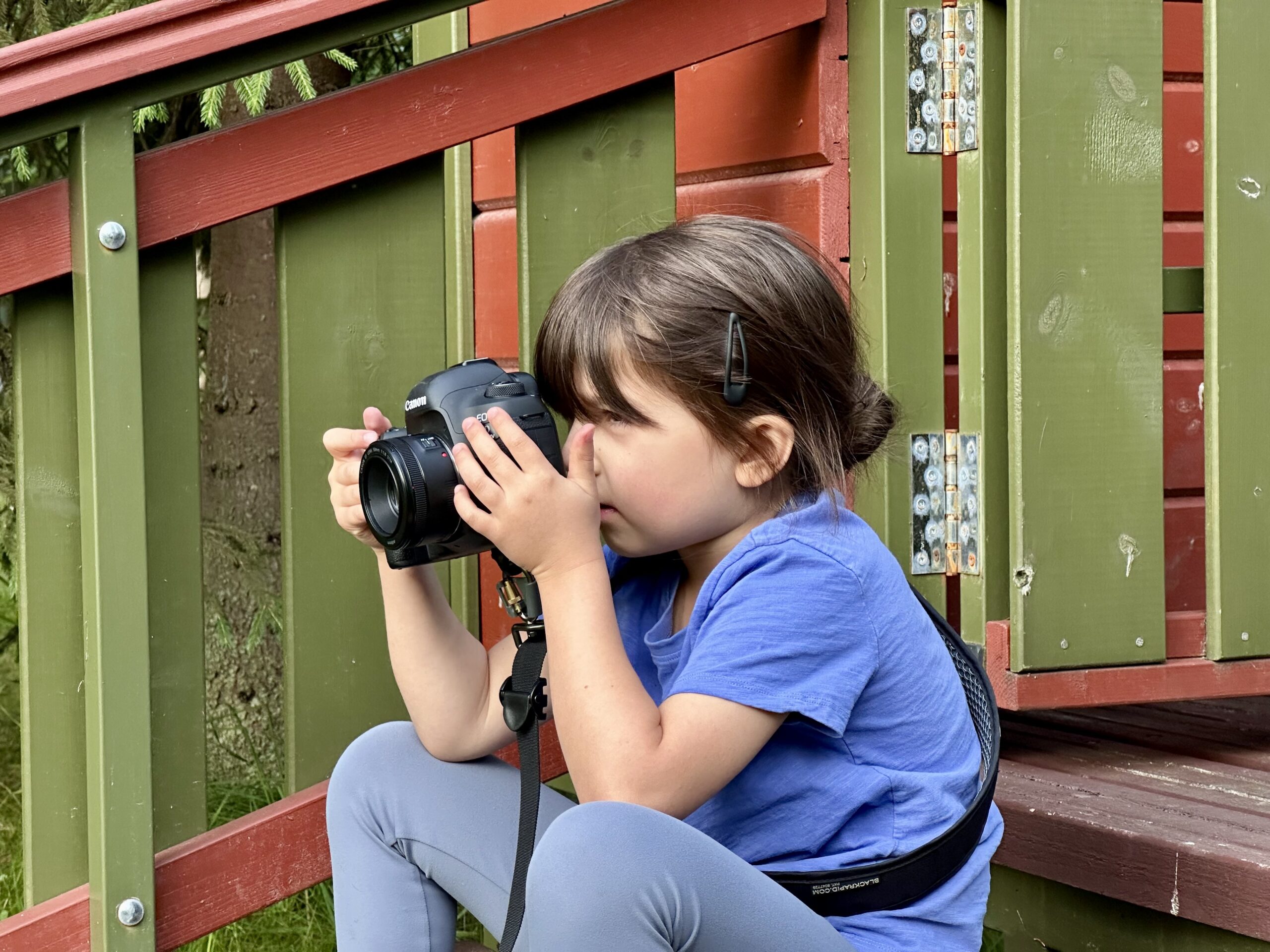
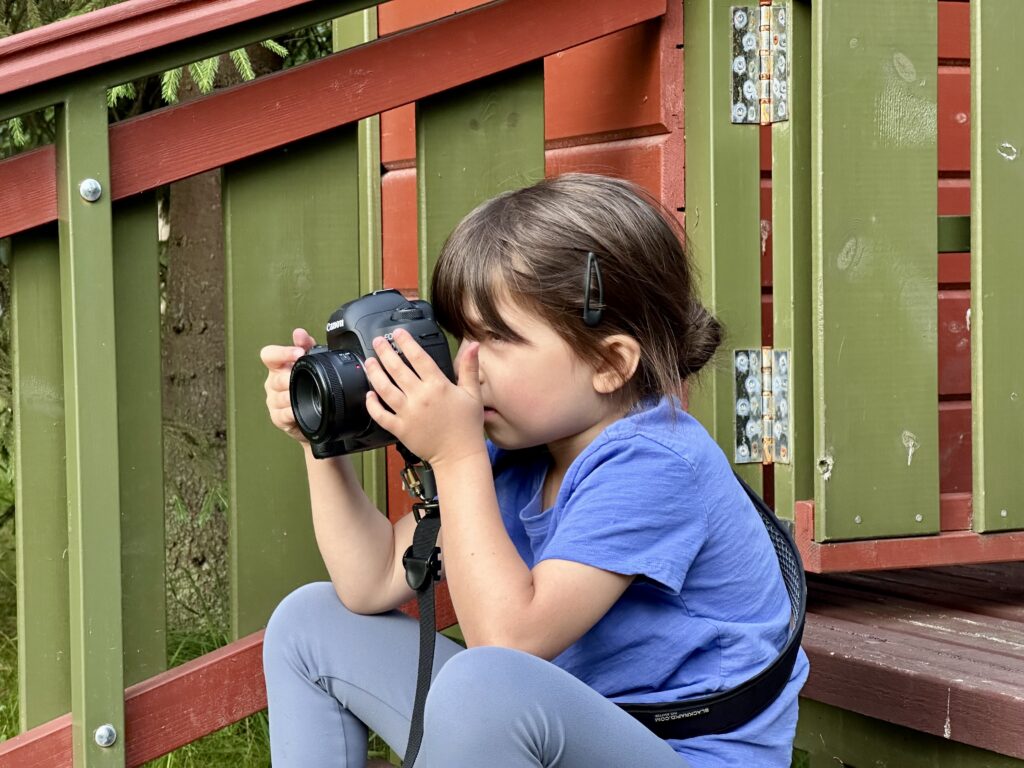
Give them a disposable camera and let them wander around the house, garden or on a walk. The only instruction is that there is a limited number of frames. Let them photograph whatever catches their attention. It slows them down, makes them more deliberate with each frame, and lets them experience waiting, disappointment and surprise when the photos come back.
Treasure hunt (younger children)
Give them a phone, a tablet or a simple camera. Prepare a few prompts on pieces of paper and let them draw one at a time. Keep prompts simple: a colour, a shape, something soft, something hidden. It gives them a reason to look more closely without worrying about getting it wrong.
Treasure hunt (older children)
Shift the focus from finding to thinking. Prepare prompts in advance and let them pick one, but make them more complex: similarities, opposites, groups of things that belong together, shadows. You will see how they make sense of the world and which patterns they spot.
Meaning-making
Fill a basket with random objects such as coloured paper, small toys, food, utensils or scarves, and decide in advance how much mess you can tolerate (slime, rice, shaving foam are great if you’re OK with the clean-up). Create a set of prompts, this time more abstract: emotions, concepts or characters. Let them pick one, then set a timer for 15–20 minutes. They create something that represents the prompt and photograph it. It doesn’t need to look good, it just needs to make sense to them.
Photobooth
Set up a simple space and let the child choose whether they want to be the photographer or the subject first, then take turns. The photographer can invent scenarios and expressions, for example “pretend you see a lion behind me” or “imagine I’ve just done something embarrassing in public”. It’s great fun and also teaches them the skills of empathy, improvisation and presence.
If you want to take this last activity further, here is a guide to DYI family photos.
All of this is play. What they are practising is attention, courage, choice and expression. The camera is a tool that slows them down.